↓Deutsch
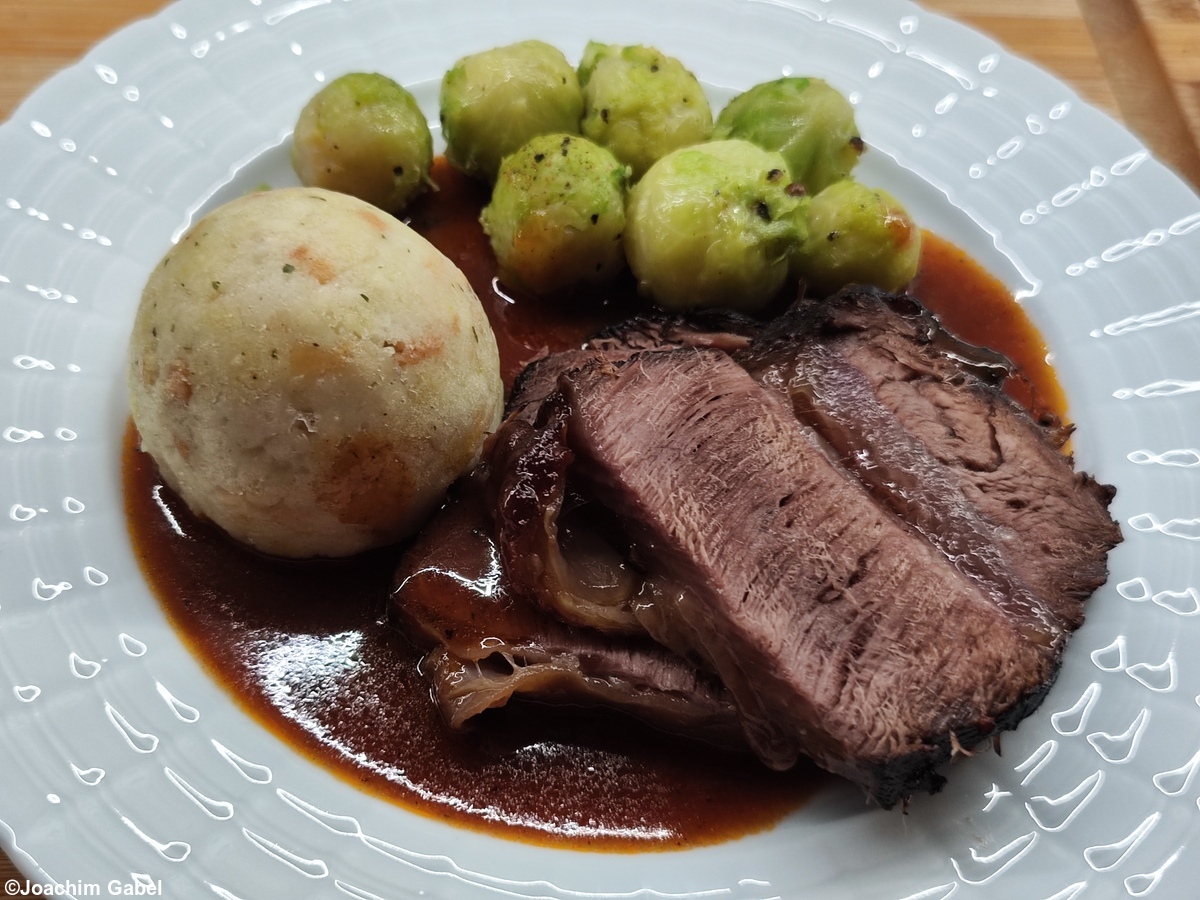
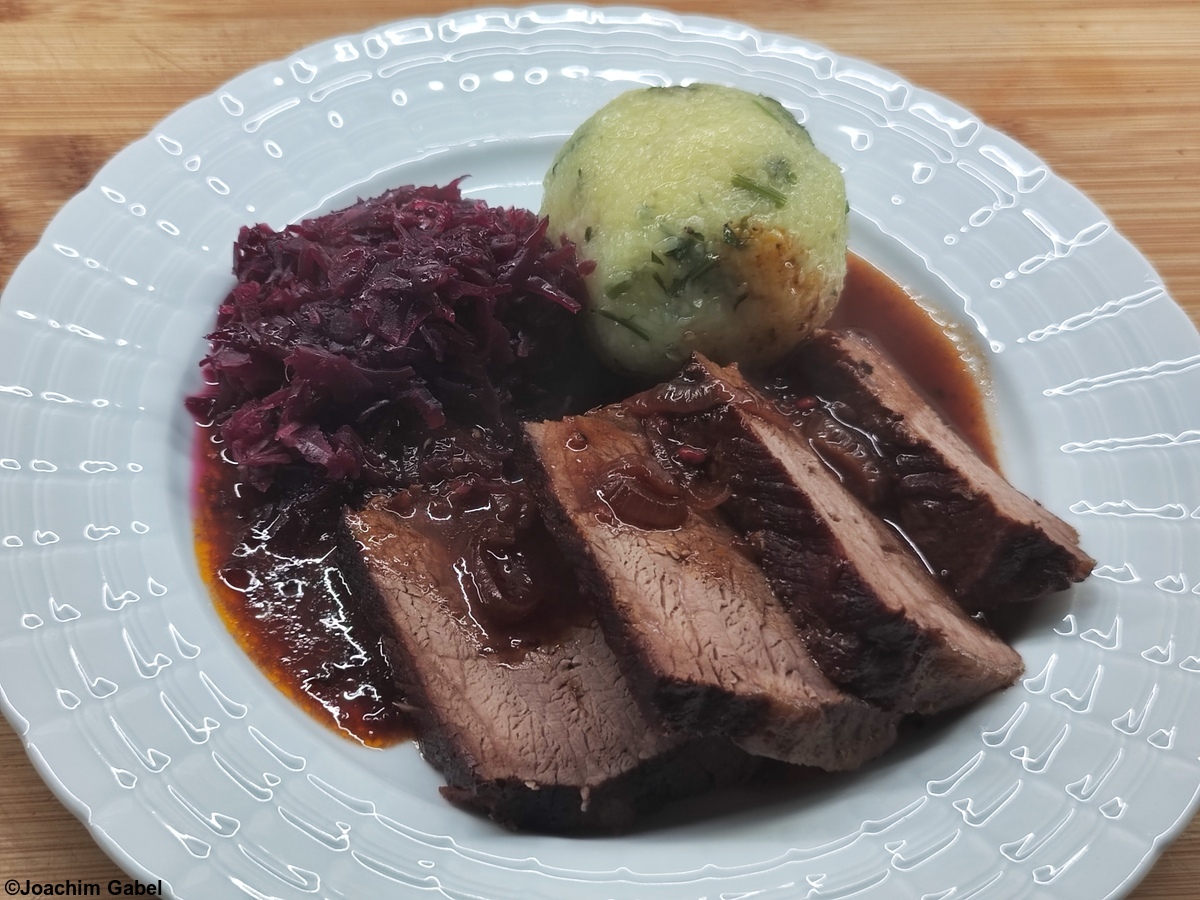
If an ox was slaughtered in earlier times, there accrue naturally tons of meat, which indeed were not allowed to rot. Therefore a conservation option was the Sauerbraten‘. With vinegar and wine marinated, beef can be preserved for weeks.
Nowadays Sauerbraten is mostly a beef roast with a little vinegar in the sauce, this recipe is the original. 2 servings Ingredients:
600 g beef from the shoulder
170 ml red wine vinegar
170 ml red...
↓Deutsch
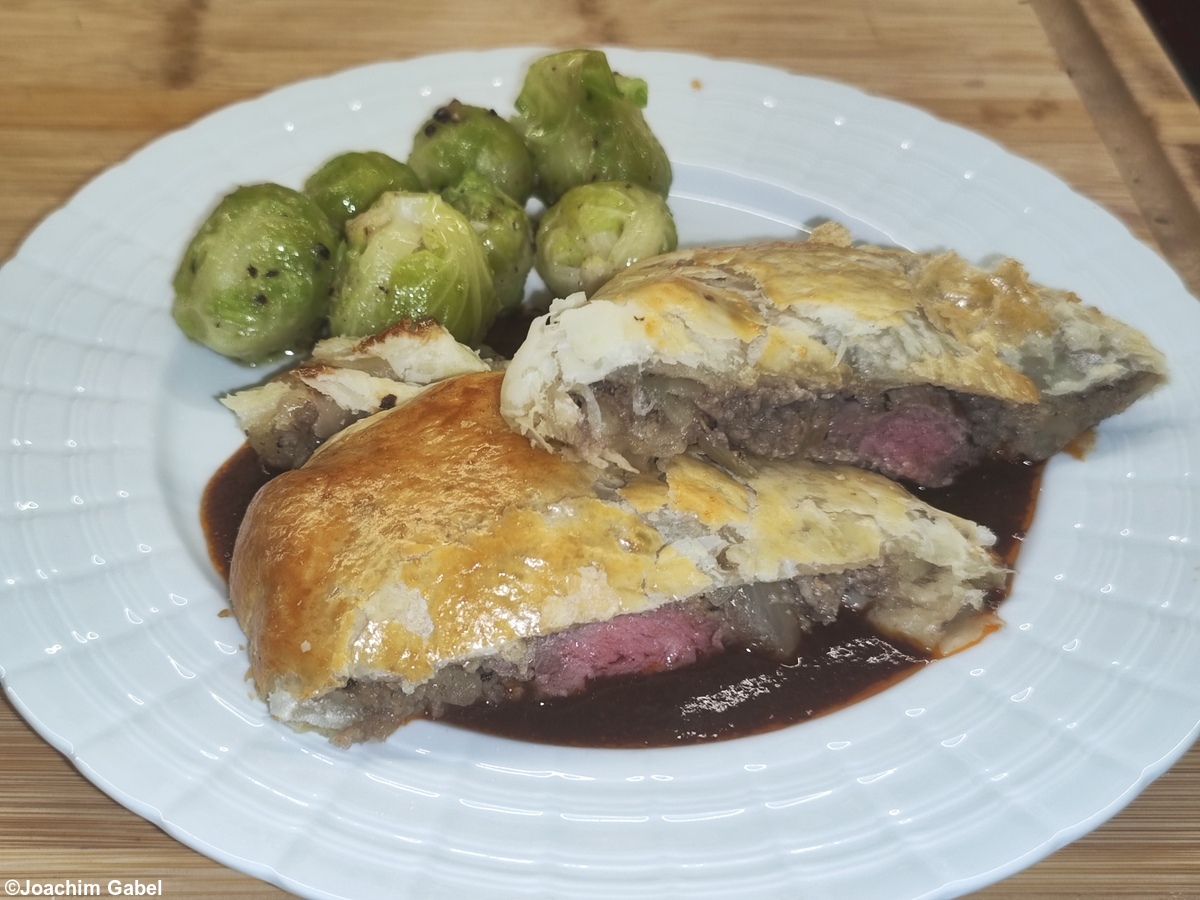
A fairly traditional dish dedicated to Arthur Wellesley, Duke of Wellington, the victor of the Battle of Waterloo. It's not really cheap either, with prices per kilo for beef fillet being around €100/$100.
The recipe probably comes from the older French Filet de boeuf au crôute. The Wellington variant appeared in German-language cookbooks around 1900. I can hardly think of a reason why the Grande Nation would honor its conqueror...
↓Deutsch
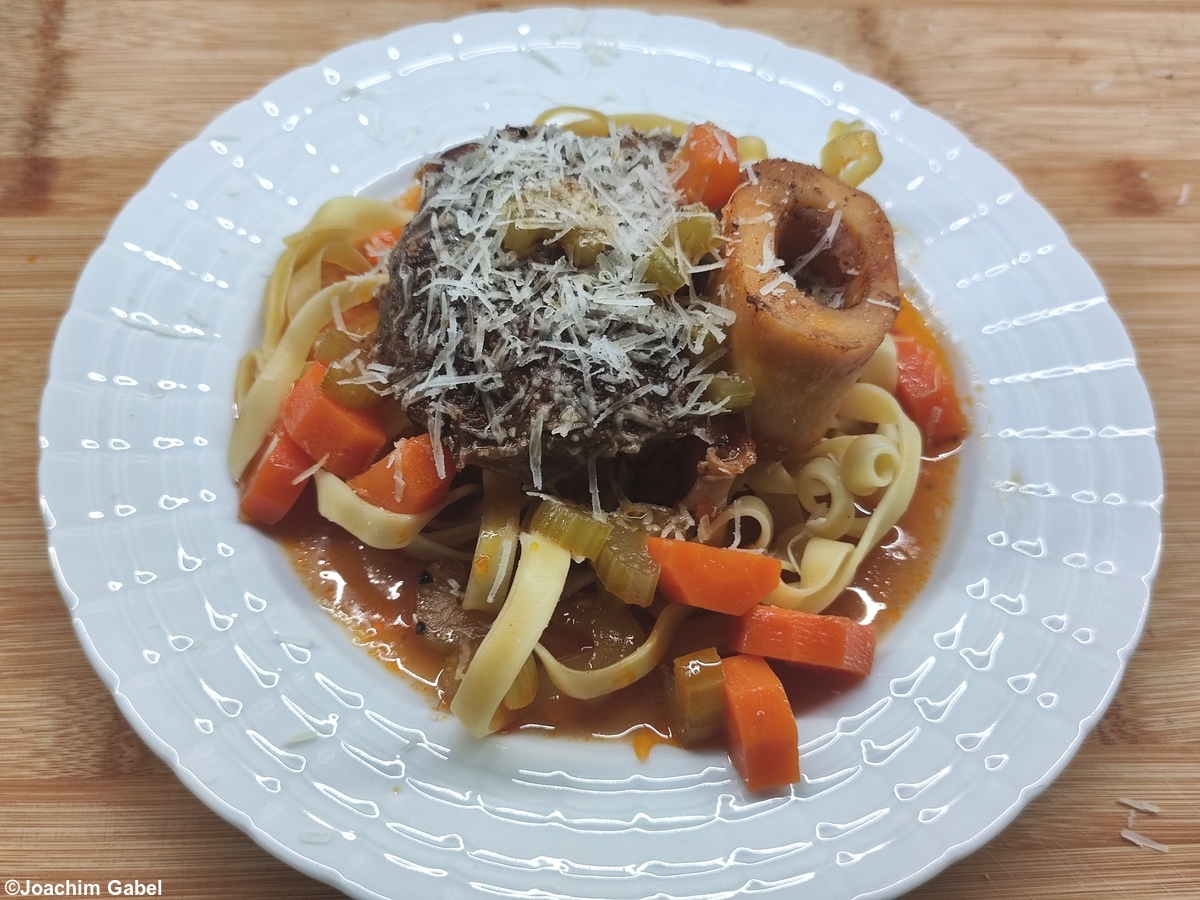
Ossobuco means marrow bones or bone with a hole, whereby the leg bone is meant in the middle of a leg slice. Ossobuco is a classic recipe of the Italian cuisine, where there are the modifications osso buco, osso buco Milanese (butter as frying fat, tomato paste) and osso buco in Lombardian style (alla gremolada, chopped lemon zest, tomato puree, sage).
With the Italian veal it also has a special feature. In Italy the in Germany usual...
↓Deutsch
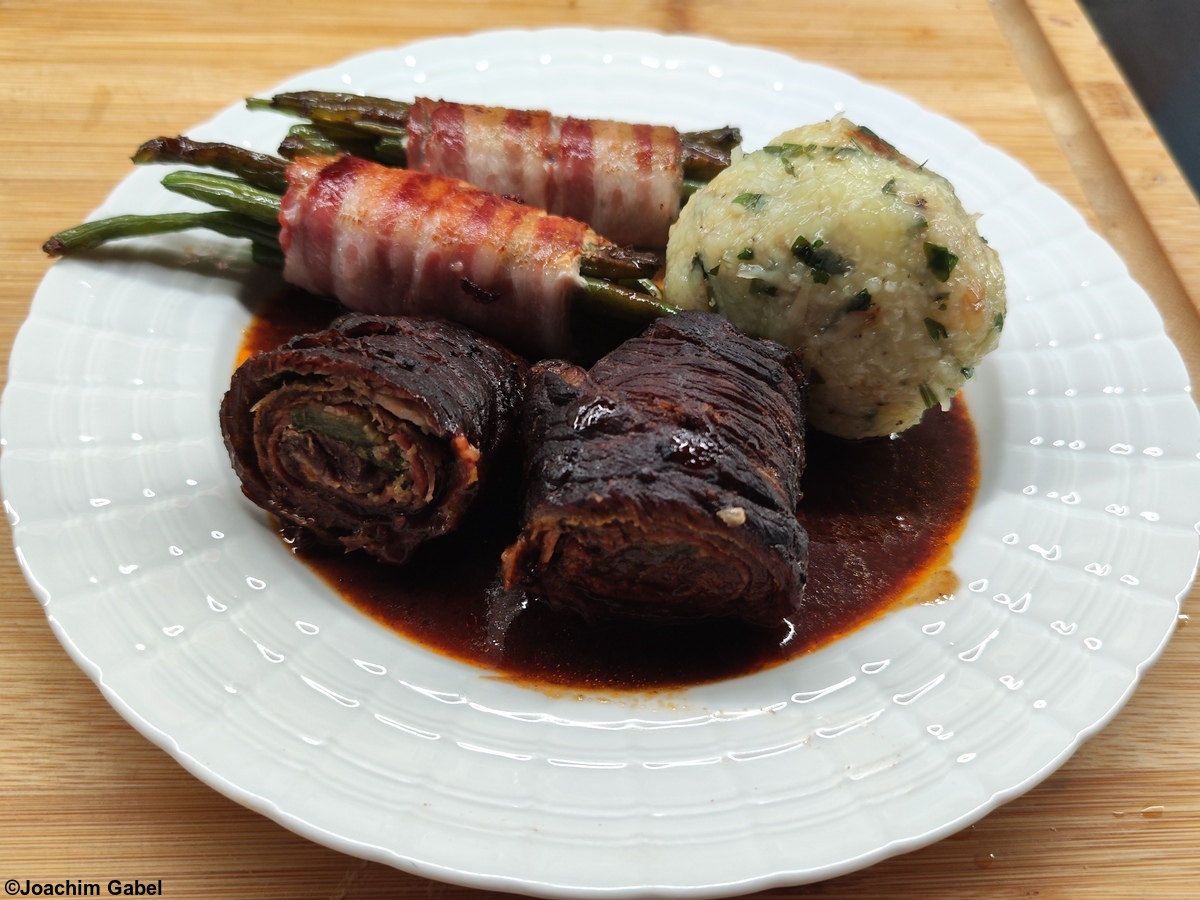
There are countless variations of beef rouladen in Germany. They are stuffed with minced meat, mushrooms, eggs and what ever. But there is one classic stuffing that is known throughout Germany, bacon, onions and gherkins. However, the Hessians would not be Hessians, if there is not a contrast to the rest of Germany. Throughout Germany, the ingredients for the stuffing are cut into small pieces. The bacon is in cubes or thin slices,...
↓Deutsch
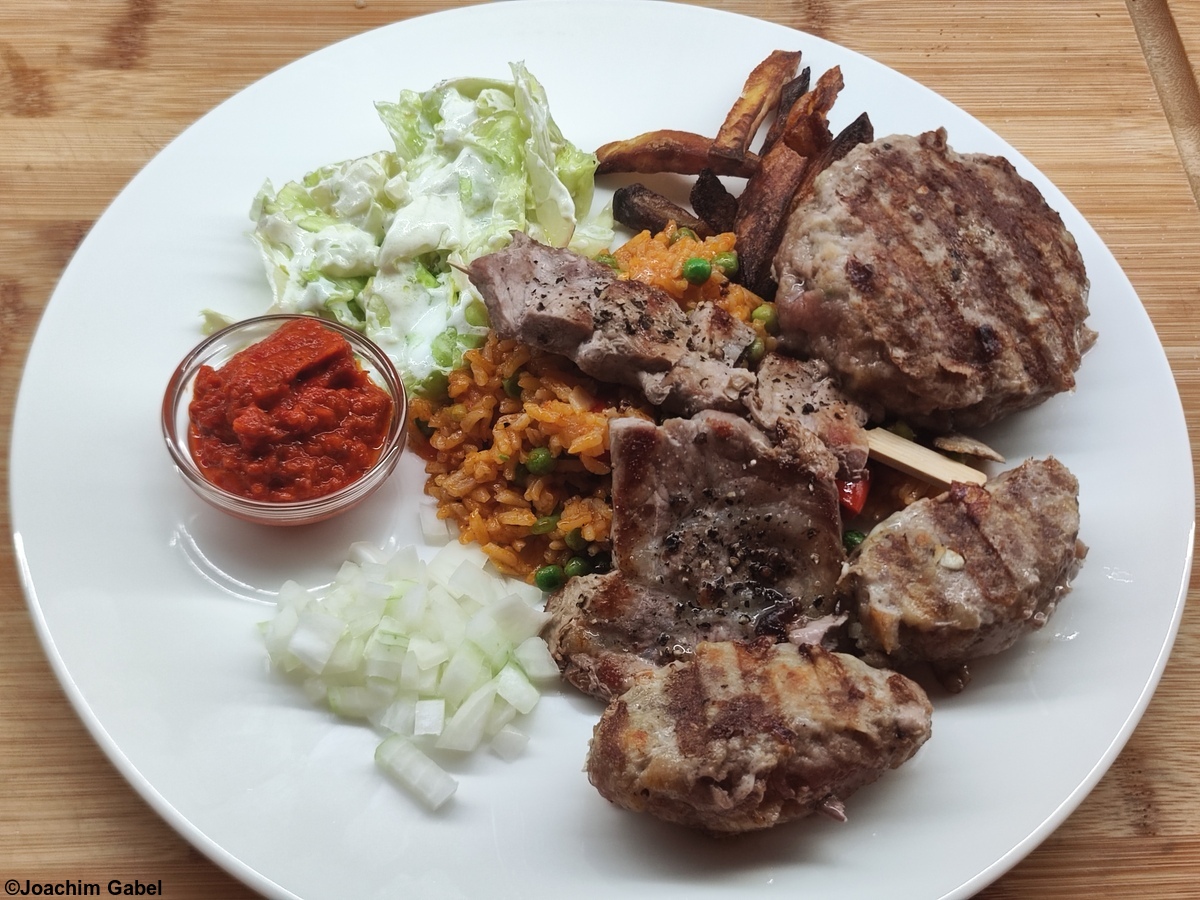
In this recipe it goes about the great Balkan plate, in Croatian (formerly Yugoslavian) restaurants served in Germany. This involves primarily masses of meat of various animals from the grill and the typical side dish Djuvec rice is served. In order to match the German taste, this is served with a mixed salad and French fries, too.
Yugoslavian kitchen was shortly after the Italian the second wave of foreign food, which arrived in...
↓Deutsch
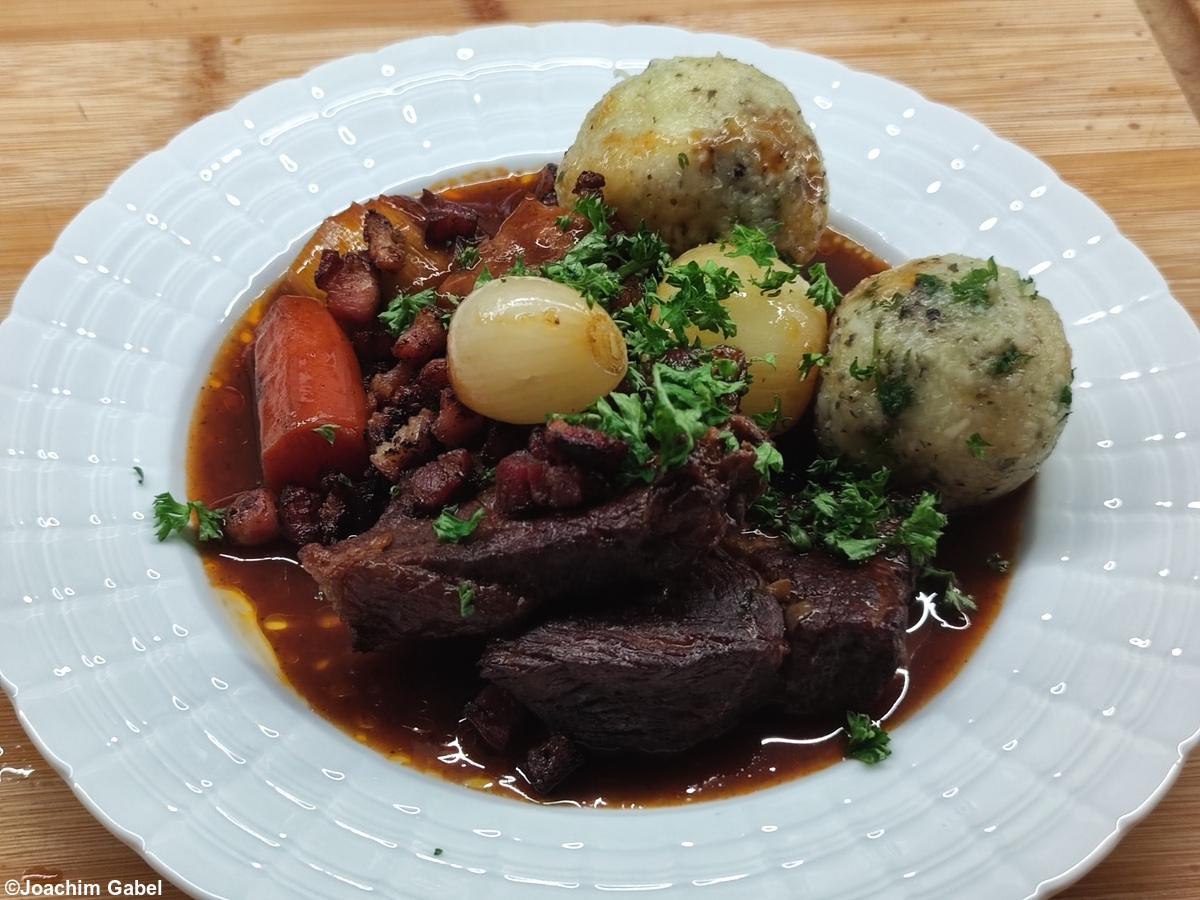
The beef roast in red wine is a German-French combination, which probably originates from the Boeuf bourguignon. As our French neighbors are no friends of so large roasts, the meat is cut into large pieces, while we Germans prefer the whole roast. 2 servings Ingredients:
600 g beef roast from neck, shoulder or leg
3 tablespoons oil
salt
pepper
½ bunch greens (carrot, celery, leek), diced
1 onion in strips
1 tablespoon tomato...
↓Deutsch
Almost all over the world this is known as either ragù bolognese or sauce bolognese, preferably with spaghetti. The Bologna Chamber of Commerce has a fixed recipe for this, but hardly anyone follows it. I've seen the most adventurous constructions with mixed minced meat, minced poultry, vegetarian with lentils and whatever else I know. Minced meat is fried, mixed with tomatoes and boiled for 30 minutes. This is then called sauce...
↓Deutsch
Are Hamburger from Hamburg? Probably Frikadellen are from Germany. And probably in earlier times the baker and the not the butcher wins (=more bread than meat). That might have been the main food of German emigrants to America. Lots of bread mass and rather less minced meat. This of course has nothing to do with hamburgers, which are usually made of pure ground beef. However, so could have come Hamburg to America.
Let’s talk about...
↓Deutsch
The term goulash (Gulyás) is originally from Hungary, and was the name given to the cattle herders of the Puszta. They cooked over an open fire in a kettle a soup-like dish, originally probably only with onions, garlic and meat. After the discovery of America the peppers came probably over the Ottoman Empire to Hungary and so became an indispensable part of the soup.
A presumably derived therefrom stew with meat and pepper is...
↓Deutsch
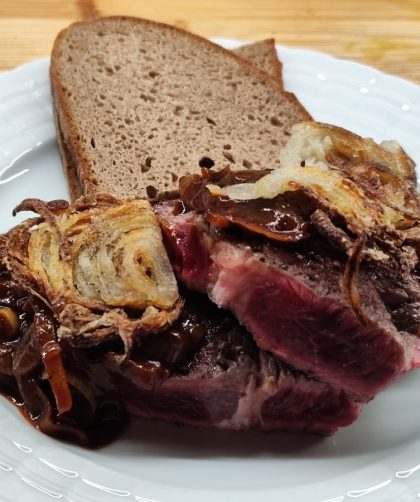
Steak bites have one advantage over whole-cooked steaks, and that's their larger surface area. Seared very briefly and very hot on all sides, they stay pink inside and are nicely seared all over. I then kept them warm in the oven at 50°C/122°F while I made the gravy.
I stuck to a classic gravy without any strong aromatic spices so as not to overpower the beef flavor. I added just 1 teaspoon of dried tarragon to enhance the mild...
Hinweispflicht zu Cookies
Webseitenbetreiber müssen, um Ihre Webseiten DSGVO konform zu publizieren, ihre Besucher auf die Verwendung von Cookies hinweisen und darüber informieren, dass bei weiterem Besuch der Webseite von der Einwilligung des Nutzers
in die Verwendung von Cookies ausgegangen wird.
Der eingeblendete Hinweis Banner dient dieser Informationspflicht.
Sie können das Setzen von Cookies in Ihren Browser Einstellungen allgemein oder für bestimmte Webseiten verhindern.
Eine Anleitung zum Blockieren von Cookies finden Sie hier.