↓Deutsch
Now politically correct paprika cutlet (Paprikaschnitzel, although that is actually an own recipe) is one of the most famous German cutlet recipes next to the hunter cutlet (Jägerschnitzel) and is usually served in the restaurant. With this recipe you can make it at home, too.
Mostly this is a breaded cutlet fried and the sauce is poured over. In the restaurant french fries are served with, at home I prefer fried potatoes as a side...
↓Deutsch
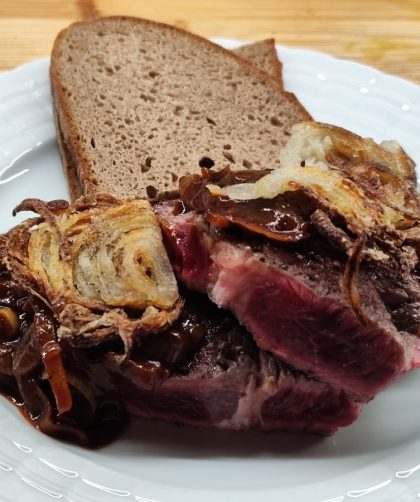
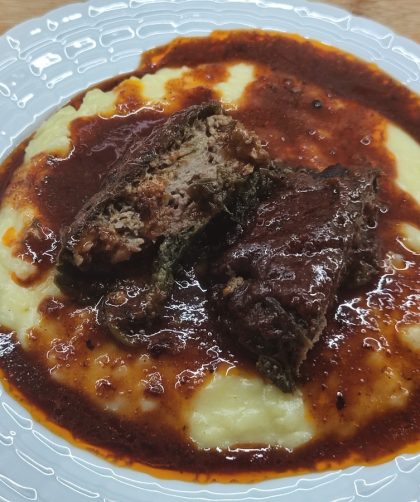
If an ox was slaughtered in earlier times, there accrue naturally tons of meat, which indeed were not allowed to rot. Therefore a conservation option was the Sauerbraten‘. With vinegar and wine marinated, beef can be preserved for weeks.
Nowadays Sauerbraten is mostly a beef roast with a little vinegar in the sauce, this recipe is the original. 2 servings Ingredients:
600 g beef from the shoulder
170 ml red wine vinegar
170 ml red...
↓Deutsch
This is a very simple recipe for mussels. Root vegetables and onions are cooked in white wine, add mussels, ready.
The dish is very popular in Germany in the Rhineland from Cologne to Aachen, partly also in the Ruhr area. The main ingredients mussels from the Rhine delta and wine from the Middle Rhine were already available through the shipping industry in ancient times.
Traditionally the dish is served with black bread and butter,...
↓Deutsch
This recipe is a variation on Black Forest-style breaded trout. Putting a whole fish on my sweetheart's plate usually results in a kind of spit-up when the first bones appear. It can easily happen that two-thirds of the fish ends up in the compost bin.
So I taught myself how to fillet whole fish myself. If you don't feel confident doing this, you can have it done at a good fishmonger's.
Tip: Sometimes you can find ready-made trout...
↓Deutsch
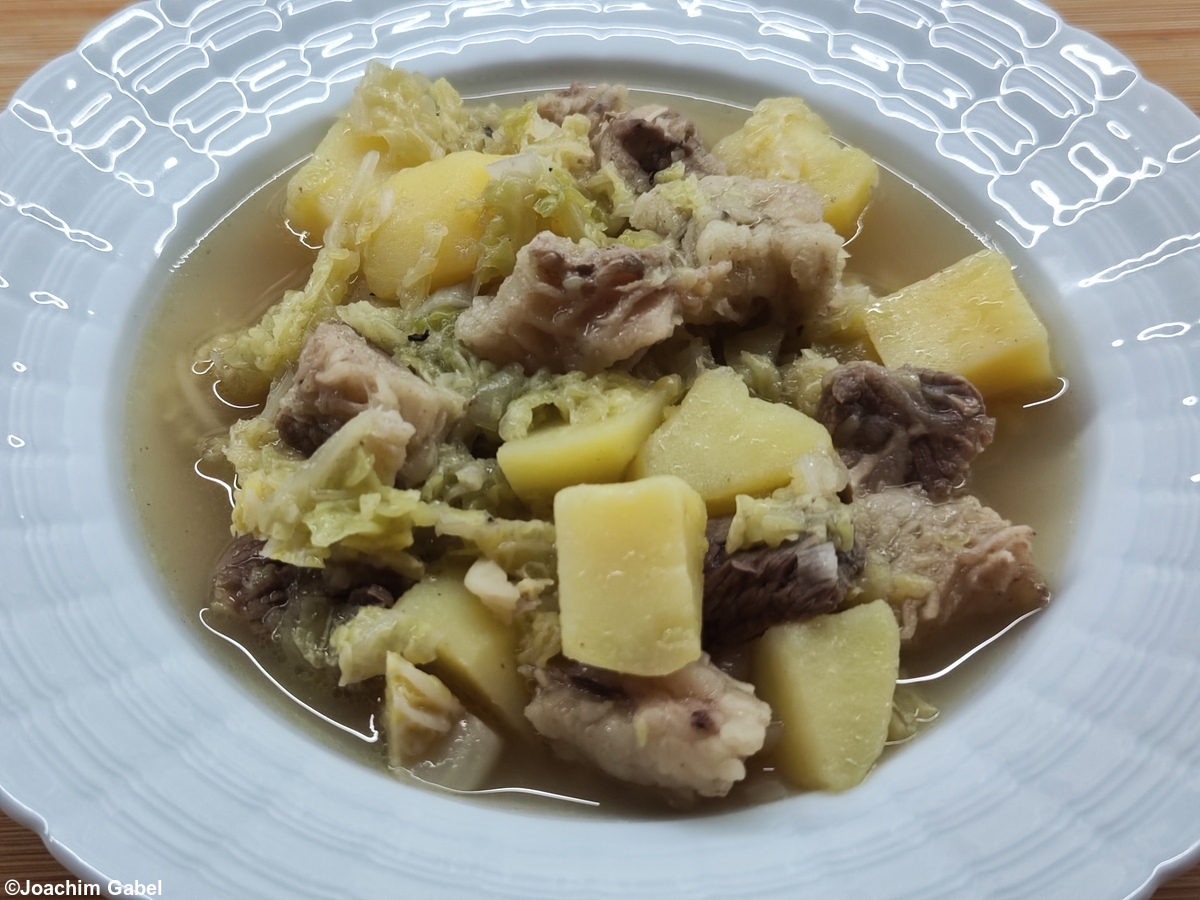
„Möhrendurcheinander“ is a typical German-Westphalian stew. The basis is always a good broth, carrots, meat and potatoes. The meat is at its simplest way with some bacon, but can be richer with pork, fresh or cured. My wife's recipe (who comes from the Ruhr area) even uses black pudding instead of meat.
In the meantime I found out that the recipe found its way to the south of Germany, mostly under the name carrot and potato...
↓Deutsch
The stuffed cabbage, although reported in Germany as a typical German dish, is also known by our eastern neighbors in Poland, the Czech Republic, Russia, Hungary and the former Yugoslavian states. The best known are the Sarma from soured as a whole cabbage leaves similar to sauerkraut and filled with giblets from pork or lamb.
In the broadest among these recipes, the Arab-Egyptian Mashi, wich means all kinds of stuffed vegetables,...
↓Deutsch
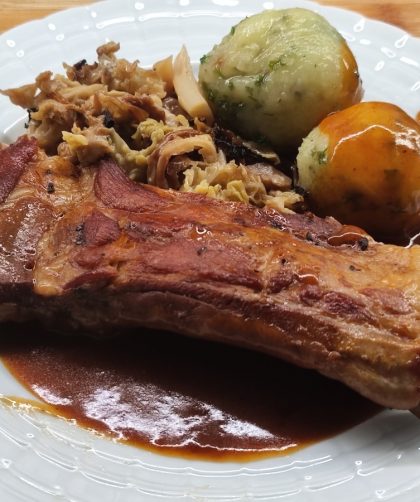
Ribs mean something different around the world. The most well-known are probably spare ribs from the pork belly or from the bones of the pork chops. Close behind are smoked pork ribs from the pork loin, which are cured, smoked, and sometimes boiled.
Here, we're specifically talking about Frankfurt ribs. They're cured and boiled, never smoked. These loin chops or ribs are now also sold outside of Hesse. But what you can't get anywhere...
↓Deutsch
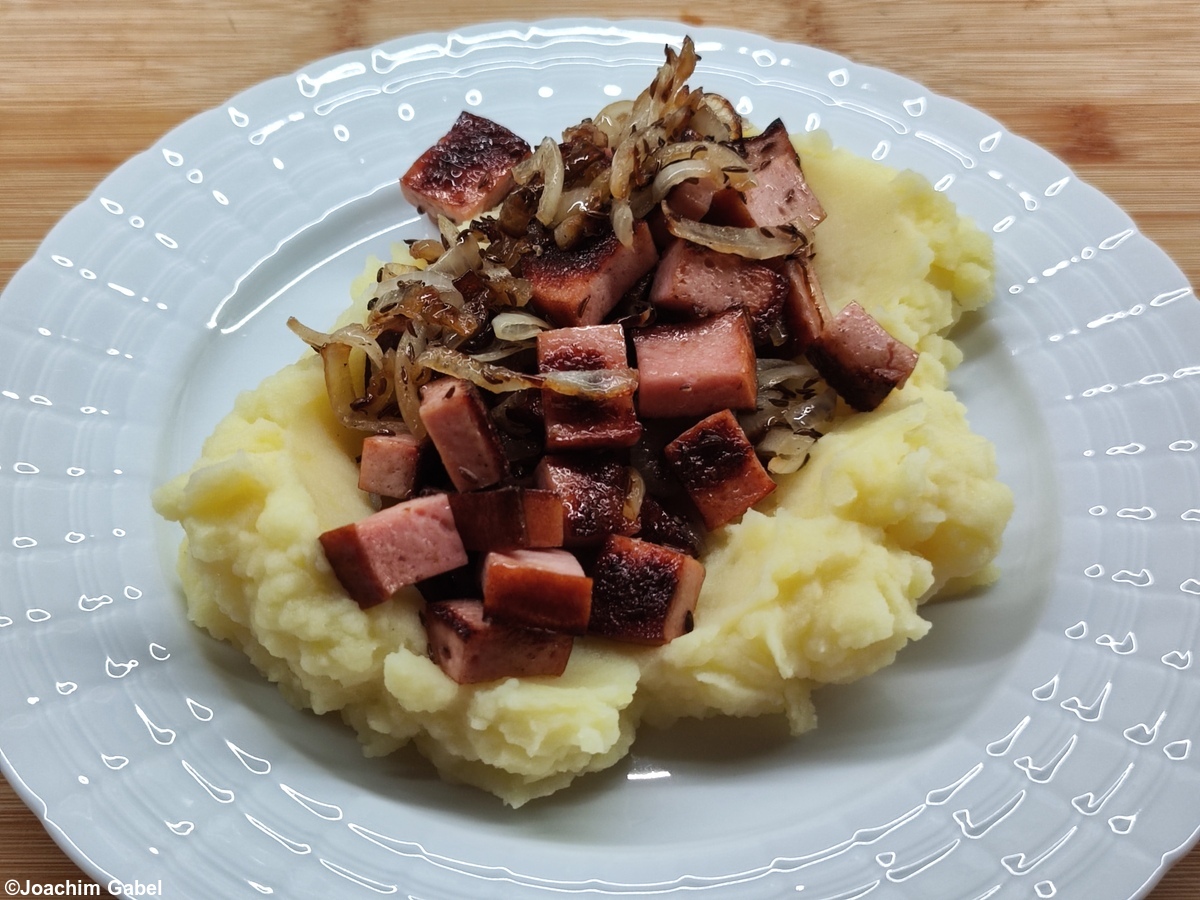
The “Leberkäse” (liver cheese) or “Fleischkäse” (meat cheese) is a special meatloaf, minced in a cutter as fine as the meat for Wiener. It has nothing to do with liver or cheese, the name came from the medieval German words for loaf (Laib) and for minced sausage meat. So the original word was “Laiberkas”.
Some recipes contains also eggs and bread or flour and therefor they can’t be denoted as sausage, they belong to...
↓Deutsch
An essential accompaniment to the Palatinate jacket potatoes is, besides the Hausmacher sausage, the white cheese, which in other German regions is simply called herbal quark/curd cheese. In the simplest case, quark is either mixed with chives or spring onions and salt and allowed to marinate for one hour. You can enrich it with garlic and chili pepper, but this is no longer original Palatine.
If you e.g. live in the U.S. and can not...
↓Deutsch
Rutabaga unfortunately have a bad reputation in Germany, which still stems from the notorious rutabaga winter 1916/1917 in Germany during the First World War. Even in the first years of hunger after the Second World War, the rutabaga were again the first choice to alleviate the food shortage.
In the 1990s, the rutabaga suddenly became sociable again and I just tried this stew and with enough good ingredients, they are very...
Hinweispflicht zu Cookies
Webseitenbetreiber müssen, um Ihre Webseiten DSGVO konform zu publizieren, ihre Besucher auf die Verwendung von Cookies hinweisen und darüber informieren, dass bei weiterem Besuch der Webseite von der Einwilligung des Nutzers
in die Verwendung von Cookies ausgegangen wird.
Der eingeblendete Hinweis Banner dient dieser Informationspflicht.
Sie können das Setzen von Cookies in Ihren Browser Einstellungen allgemein oder für bestimmte Webseiten verhindern.
Eine Anleitung zum Blockieren von Cookies finden Sie hier.