↓Deutsch
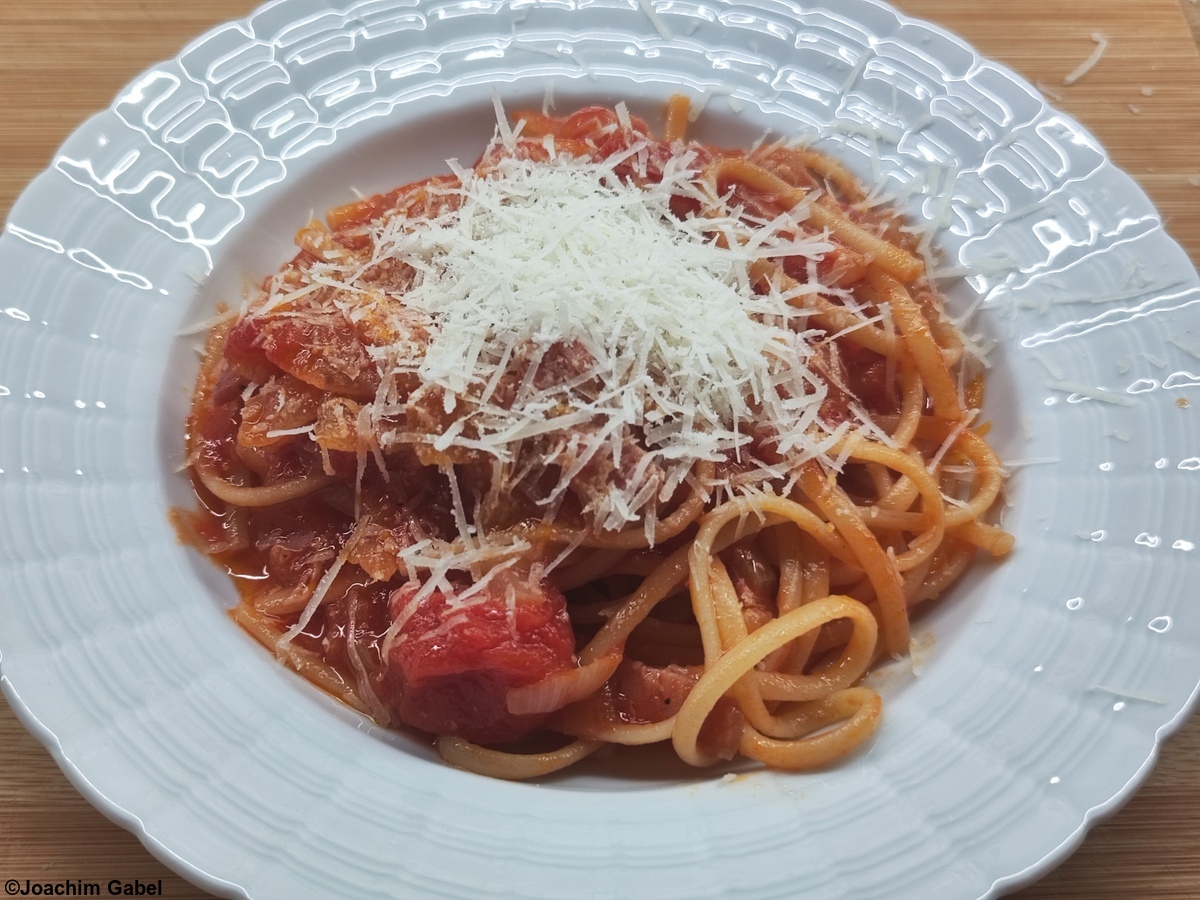
Pasta al arrabiata is one of the countless tomato sauces available alongside Napoletana. How the name implies, furious means it is hot. What I did not know until June 2019 is that it does not use pancetta but guanciale (air dried pork cheek). I use Italian canned tomatoes as a basis and like one fresh tomato. For the (light) sharpness I liked to use fresh Thai Birdeye Chiles. We now have Italian dried Pepperoncini. 2 servings...
↓Deutsch
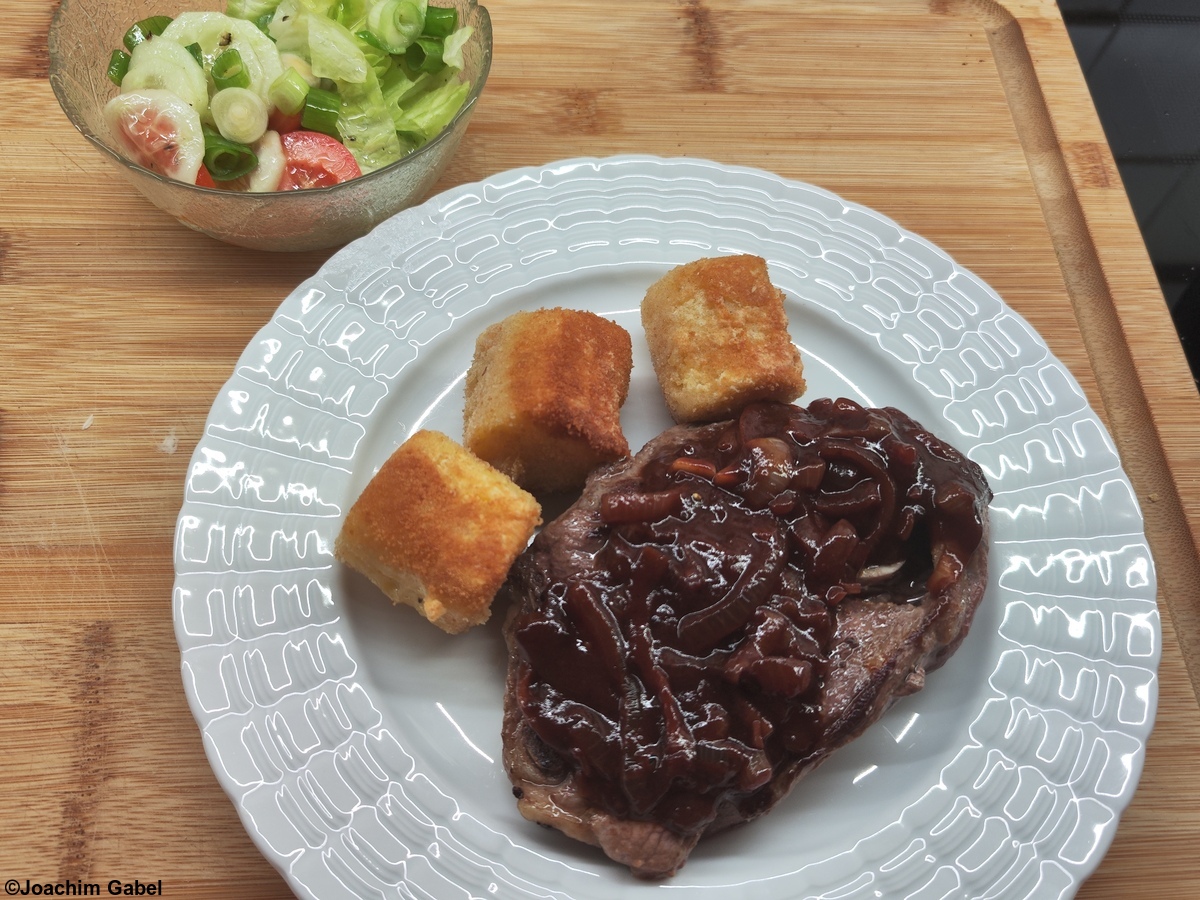
There are still tons of slices of lamb shoulder slumbering in our freezers, waiting to be used. So why not a Swabian roast with onions, only instead of rump steak under the onion sauce, there's lamb. 2 servings Ingredients:
2 tbsp olive oil
1/2 tbsp flour
2 tbsp tomato paste
200 g sliced onions
150 ml port wine
150 ml beef broth
150 ml red wine
salt
pepper
2 lamb shoulder steaks, approximately 150 - 200 g Preparation:
Fry the...
↓Deutsch
This is the most famous dish in Germany on Fridays. This can be found in a similar way at a star restaurant, the inn, the canteen or the snack bar. Breaded fish fillet with potato salad. The remoulade sauce is optional and can be replaced by a lemon slice, for me the remoulade simply belongs to it.
The best-known fish is cod, pollock and ocean perch, but also sole, salmon and various freshwater fish such as pikeperch or sea trout can...
↓Deutsch
This is one of the most popular dishes to the new wine – feather white, but of course this tastes to a glass of dry white wine throughout the year. Main distribution of the onion tart is the Rhine valley between the Vosges and the Black Forest, the Alsace region of France and the German Baden (now part of Baden-Wurttemberg). 4 servings Ingredients:
250 g flour
10 g fresh yeast
100 ml lukewarm water
1 tbsp sugar
1 pinch salt
100 g...
↓Deutsch
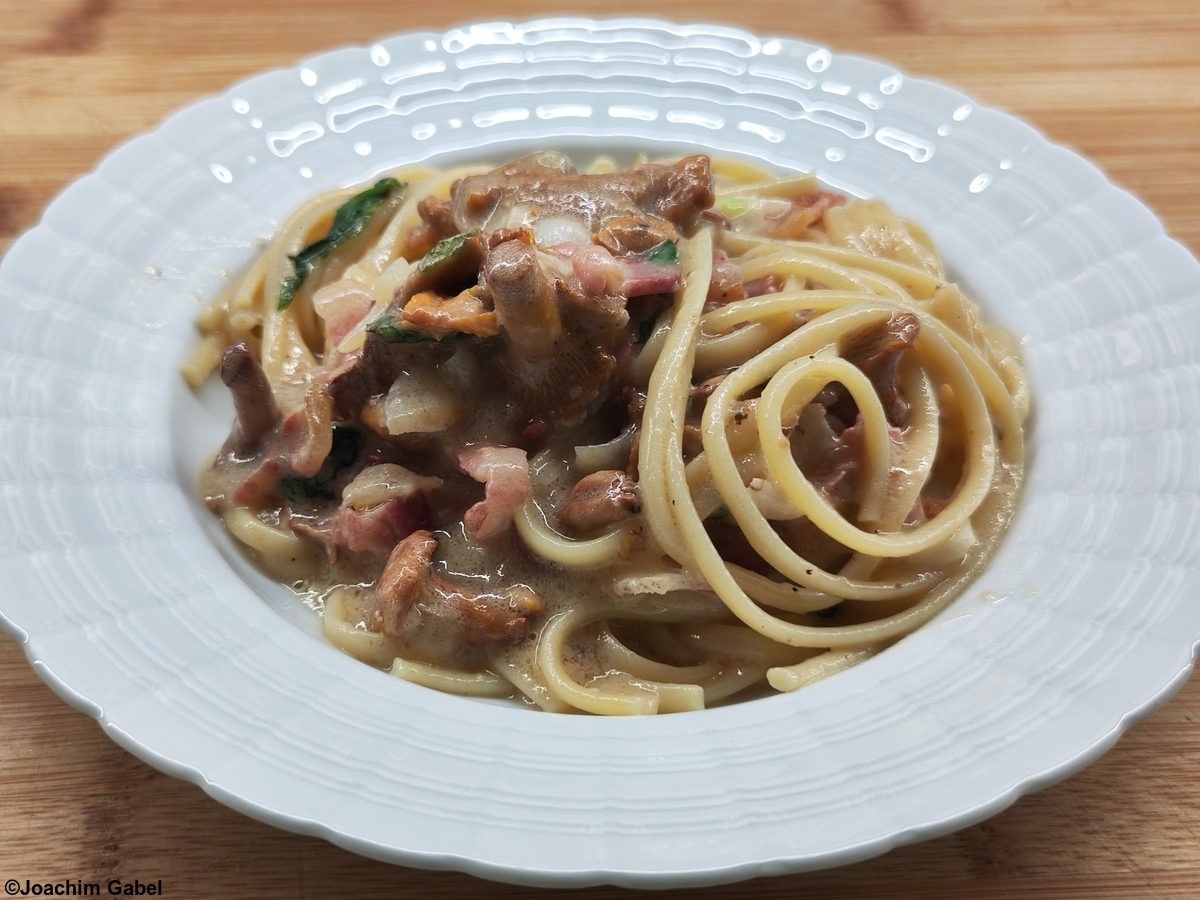
Spaghetti with chanterelles is a perennial dilemma. The perfect combination of chanterelles and bacon in a cream sauce is actually the ideal basis for this dish. But cream in a pasta sauce is completely unacceptable in Italy. The alternative of using egg yolk instead of cream, like in a carbonara, doesn't work for my sweetheart. So the sauce base consisted of white wine and cooking cream with 14% fat.
The next hurdle was the bacon....
↓Deutsch
Sauerkraut plates are well known in many variants in Germany and Alsace. The sauerkraut is cooked with lard, sometimes with white wine and/or garlic and often with bacon.
And yes, Alsace is now a part of France, this is true, but in earlier times this was a part of the German Empire until the time of the ThirtyYears‘ War from 1618 to 1648 and the great eastward expansion of France under Louis XIII. and XIV. During this time,...
↓Deutsch
Are Hamburger from Hamburg? Probably Frikadellen are from Germany. And probably in earlier times the baker and the not the butcher wins (=more bread than meat). That might have been the main food of German emigrants to America. Lots of bread mass and rather less minced meat. This of course has nothing to do with hamburgers, which are usually made of pure ground beef. However, so could have come Hamburg to America.
Let’s talk about...
↓Deutsch
The term goulash (Gulyás) is originally from Hungary, and was the name given to the cattle herders of the Puszta. They cooked over an open fire in a kettle a soup-like dish, originally probably only with onions, garlic and meat. After the discovery of America the peppers came probably over the Ottoman Empire to Hungary and so became an indispensable part of the soup.
A presumably derived therefrom stew with meat and pepper is...
↓Deutsch
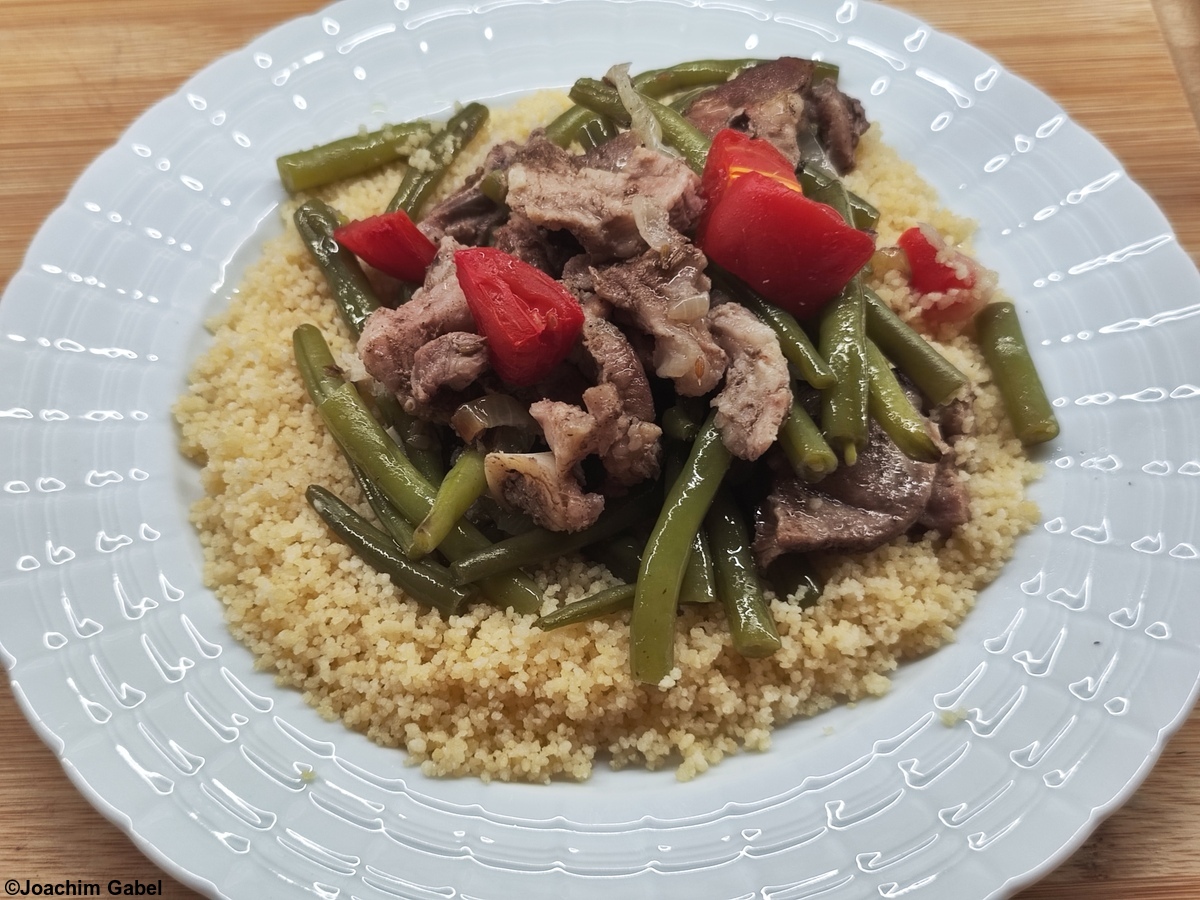
Here we take a journey into Moroccan cuisine with a tagine, the classic clay pot from the Maghreb. The name tagine refers to both the clay pot and the dishes cooked in it. Since I don't have a special container in my already overcrowded kitchen for a dish I only prepare every few years, I simply used a good old Jena glass jar.
Tagines come in countless variations, including vegetarian versions with vegetables, meat, and fish. Here,...
↓Deutsch
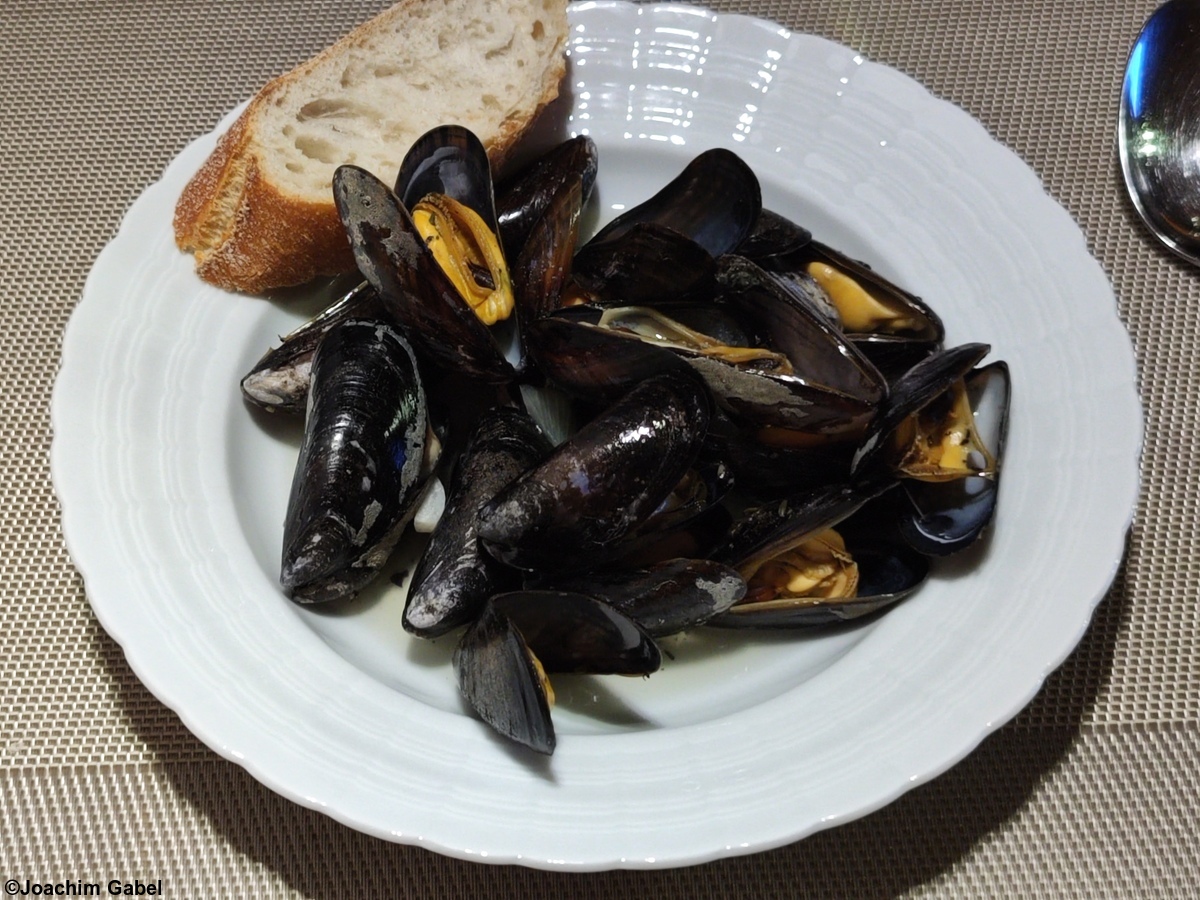
This dish is one of the most delicious mussel dishes because of its simplicity. Onion, garlic, white wine and one or two sprigs of thyme emphasize the natural taste of the mussels.
The dish is known in France as Moules mariniere (mussels on the art of the fisherman's wife) as well in Italy as Cozze marinara (mussels cooked according to the fisherman’s wife). 2 servings Ingredients:
500 ml white wine
the peels and trimmings of a...
Hinweispflicht zu Cookies
Webseitenbetreiber müssen, um Ihre Webseiten DSGVO konform zu publizieren, ihre Besucher auf die Verwendung von Cookies hinweisen und darüber informieren, dass bei weiterem Besuch der Webseite von der Einwilligung des Nutzers
in die Verwendung von Cookies ausgegangen wird.
Der eingeblendete Hinweis Banner dient dieser Informationspflicht.
Sie können das Setzen von Cookies in Ihren Browser Einstellungen allgemein oder für bestimmte Webseiten verhindern.
Eine Anleitung zum Blockieren von Cookies finden Sie hier.